In Peter Szego’s Inventing the American Guitar (2013), contributor and essayist David Gansz contrasts the production methods of C.F. Martin (1796–1873) to that of his contemporary, James Ashborn (1816–1876).
Gansz describes Martin’s background as steeped in the “old world tradition” whereas a luthier trained to become a master by showing they could build a complete instrument on their own, including all component parts from start to finish. By Contrast, Gansz describes Ashborn’s work as embracing the new methods of mass production born of the burgeoning Industrial Age.
| Specifications | |
| Date | c. 1863 |
| Location | Daytonville, Connecticut USA |
| Length of Guitar | 915 mm |
| String Length | 612 mm |
| Upper Bout Width | 227 mm |
| Waist Width | 185 mm |
| Lower Bout Width | 290 mm |
| Side Depth at Waist | 88 mm |
| Soundboard: Spruce | Back: Laminated Brazilian rosewood | Sides: Laminated Brazilian rosewood | Details: Soundboard fan braced/wood intarsia ornamentation | |
Ashborn likely arrived in New York City from England in the late 1830s, and it is surmised that he oversaw guitar production for the New York musical instrument distributor, Firth, Hall, and Pond in or around 1842 in their manufacturing facility at Fluteville, Connecticut. He opened his own factory in Daytonville, Connecticut about seven miles up the Naugatuck River from Fluteville in 1848. His innovative approach to production saw him significantly outproduce Martin over the next decade and a half before closing his operation in 1864, opting for a career in politics following his election to the Connecticut State Legislature.
Ashborn’s factory assembly included table saws, band saws, and routers powered by a waterwheel on the Naugatuck River. His workmen were tasked with producing separate components. Further streamlining his production came in the form standardization: all six of Ashborn’s guitar models were manufactured in the same size and dimensions, differentiated by the quality of materials and ornamentation. For example, mahogany might be used on lower-end models while rosewood on higher-end, or a plain rosette and purfling design instead of hand-cut intarsia inlays, or rosewood tuning buttons vs. more expensive ivory, etc.
Ashborn’s instruments were loosely based on Spanish-style guitars. He adopted a similar size and shape to the work of his London-based fellow countryman, Louis Panormo. Square-top heads, soundboards and backs secured to the sides by individually cut glue blocks, fan braces securing the soundboard, and pin bridges were all typical features of Panormo’s “Spanish-style” guitars. Additionally, Ashborn laminated his backs, sides, necks, and the back of his headstocks to increase the structural integrity of his instruments. His precision worm-and-roller tuners, manufactured on site, were most often fitted with his signature octagonal tuning buttons.
Equally efficient was Ashborn’s contracted distribution network. Ashborn’s guitars were marketed and distributed by the New York-based firms of Firth, Pond, & Co. and Willam Hall & Son. Many of his guitars bear their stamp on the center back strip visible through the soundhole. (See the c. 1851 James Ashborn No. 1 in this collection stamped “William & Hall & Son.”)
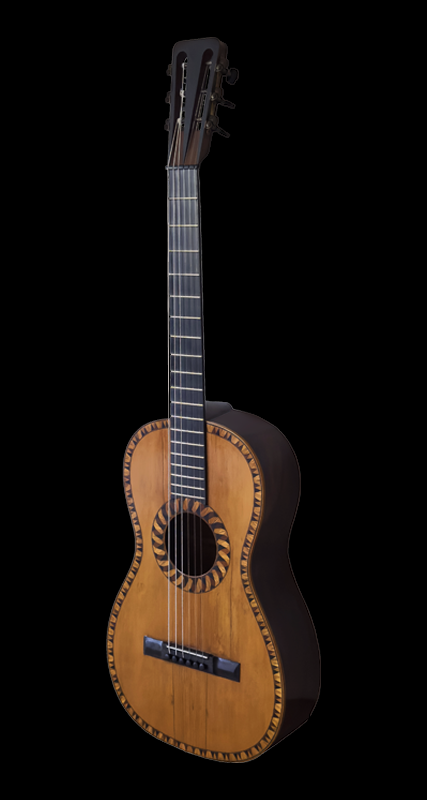
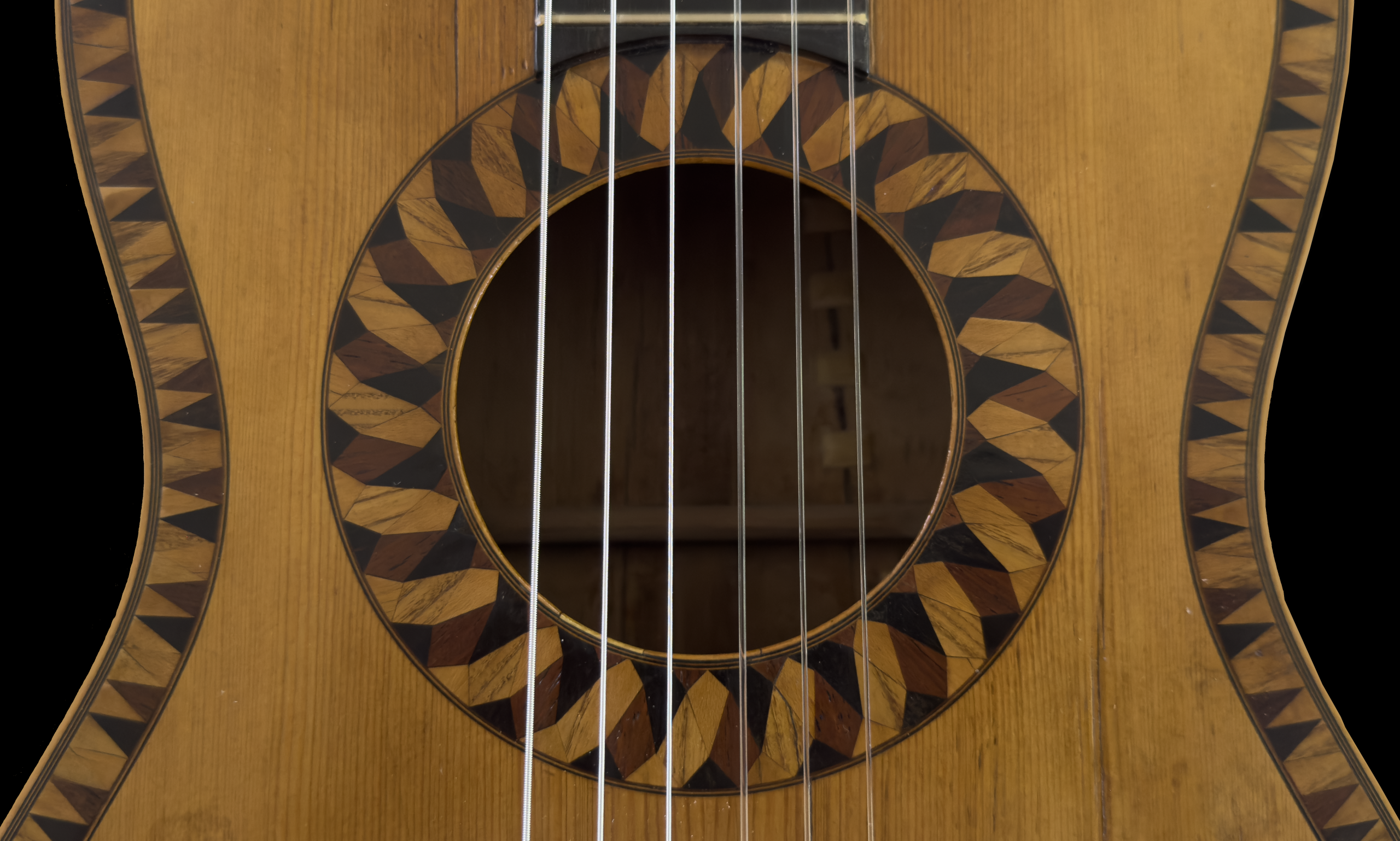
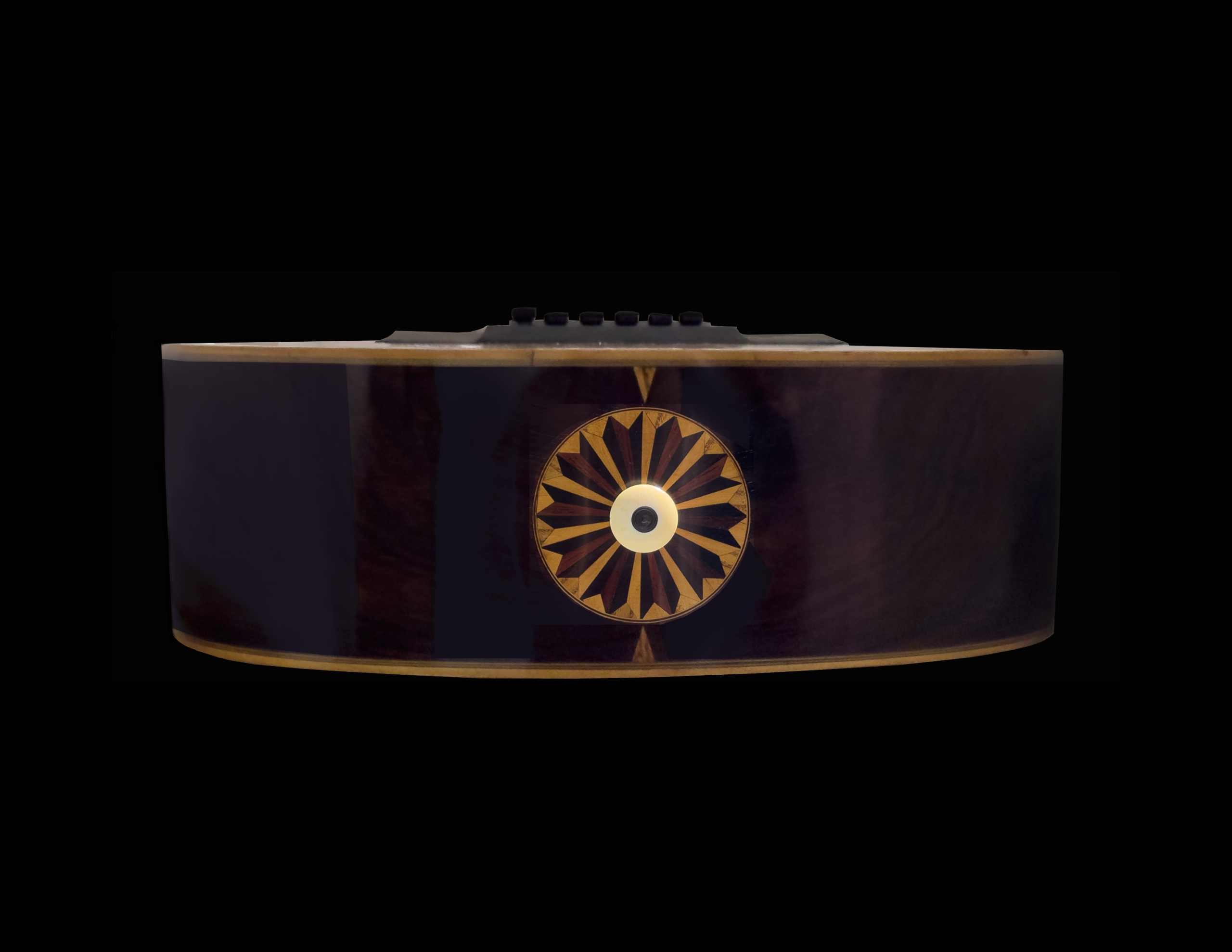
The c. 1863 James Ashborn No. 6 guitar in this collection is extremely rare. The model No. 6 accounted for just 4% of Ashborn’s production and less than 10 are known to have survived. The back, sides, and neck are veneered in highly figured Brazilian rosewood. The bridge and fretwire saddle in a separate ebony insert are original. The pinwheel rosette design is made of beautifully inlaid multi-colored wooden marquetry. The spruce soundboard is bordered by an inlaid pattern of triangles crafted using three different colored woods. As featured in all surviving No. 6 guitars, the endpin is surrounded by a decorative wooden inlaid medallion. The center back strip is stamped “J. Ashborn” as opposed to a distributor’s stamp, suggesting this guitar was sold in the latter years of Ashborn’s production.
I want to extend a special thanks to acclaimed San Francisco Bay Area luthier and restorer Alan Perlman for performing a six-month-long, tour de force restoration of this instrument. Having endured previous substandard repairs (not uncommon for older guitars) that included careless glue applications, poorly made replacement braces, unoriginal overspray refinishing, and much more (please see restoration photos in photo gallery), Alan did a remarkable job restoring this lovely Ashborn No. 6 for viewing and playing.